




Article: 01. Copywriter: Naofumi Yamada
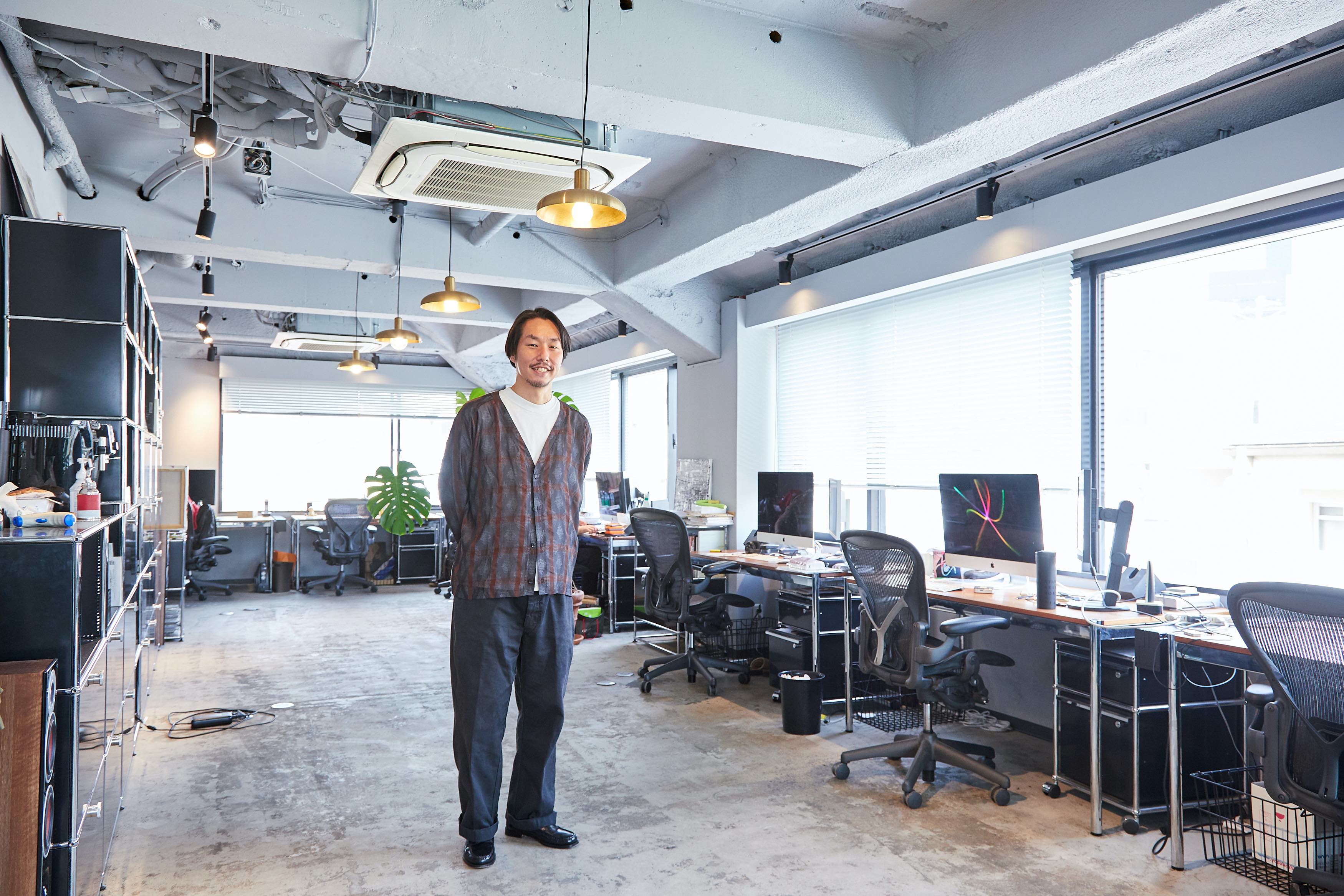
01. Copywriter: Naofumi Yamada
Could you tell us about your professional background?
Yamada: After graduating from university in Tokyo, I worked as a sales representative for an advertising agency in my hometown of Fukuoka. After that, I spent about 10 years working in advertising sales, changing jobs a few times, before joining NICE GUY in 2018, where I've been a copywriter ever since.
How did you come to join NICE GUY as a copywriter, after working in sales?
Yamada: When I was 22, I thought about what was the most important thing to learn in advertising. I concluded that fundamentally, everything comes down to "copy," so I enrolled in a copywriter training course offered by the magazine "Senden Kaigi." I found copywriting interesting, but at the time, I also enjoyed sales, so I wasn't particularly focused on becoming a copywriter. As my career progressed, I started handling larger projects, and sometimes I would plan campaigns myself or write copy. Then, because I was already friends with the members, I had several opportunities to work with them as a copywriter about two or three years before joining NICE GUY, and I realized again, "Making copy is fun after all." However, given my age, I wasn't thinking of changing careers to become a copywriter. But then Fujisawa, the representative of NICE GUY and a friend from university, asked me, "Why don't you join us?" I felt I wanted to, so I joined NICE GUY.

How do you create copy?
Yamada: I think it's the same for other copywriters, but actually writing the copy is the last 10%; the other 90% is "researching" and "thinking." For example, if I'm writing copy for gugu Doggy, I'll thoroughly research dogs from various angles, even things that seem unrelated. I just keep researching to input as much information as possible. In parallel, I'm also thinking about copy for 5 or 6 other projects, sometimes even 20, and that's a good state for my brain. The brain is strange; sometimes, when I'm working on other projects, dots connect, and I realize, "That perspective could be useful for this." And whenever an idea or angle comes to mind, I jot it down on my phone. Then, right before the deadline, I organize, write, and refine it. People might imagine it's about getting ideas or inspiration, but in reality, it's more like "digging them out," and it's very painstaking work. In this job, I'm constantly thinking about something unless I'm sleeping, so there's not much of a clear on-off switch. I'm always in an idling state.
What do you value most when creating copy?
Yamada: Since I'm not a novelist or a poet, I try not to express myself. My job is to listen to people who have something they want to convey or something they want to express, extract the passion and keywords within them, articulate them, and then output them skillfully to the world as an expression. Words don't belong to the speaker or the writer; they are 100% for the receiver. So, I think it's important to constantly imagine what the receiver wants to hear and to have empathy.

What is your energy source for work?
Yamada: I'd say it's the environment at NICE GUY. It started with four friends, and then I joined, so now there are five of us. There's absolutely no stress, and coming to work is fun. I feel like I can strive to maintain this state in the future, not just for myself but for everyone. I see us as a fated community, like a band. Our motivation is the desire for each of us to level up and reach an even better stage.
How do you spend your days off to recharge?
Yamada: I'm basically an indoor person, but I love cycling and use my bike for commuting. I often just wander aimlessly, visiting vintage clothing stores in Koenji and Shimokitazawa. It's just moving around, but it feels good and is close to the feeling of playing. Especially at my age, just riding a bike gives me a sense of accomplishment, like I'm exercising, haha. So, I think it's good for my mental health. Also, I love public baths, so I go to my favorite one in Sangenjaya once a week by bike.

How many hours do you usually sleep?
Yamada: About six or seven hours. On my days off, I sleep until I naturally wake up, haha. Due to work, there are days when I work late into the night, but I want to prioritize sleep above all else.
You've been using the gugu mattress. Is there anything specific you look for in bedding?
Yamada: I can sleep anywhere, so I never used to be particular about bedding. But since I started using the gugu mattress, I've really felt the difference firsthand – no more body aches even after long hours of sleep. My previous mattress felt like I was just "on top" of it, but the gugu mattress feels like it "fits." So, whether I sleep on my side or toss and turn, my lower back and back don't hurt.

What does sleep mean to you?
Yamada: Sleep is the end of the day, but the quality of sleep affects all of tomorrow's performance, so it feels more like the start of the next day. I believe getting quality sleep is the most important thing because it's something concrete you can do to make the next day a better one.

Text & Edit:Kazuhiro Hasegawa(gugu sleep)Photo:Kazuhiko Tawara(magNese inc.)

What sleep means to me

Takafumi Yamada, born in 1983, from Fukuoka Prefecture. As a copywriter at NICE GUY Inc., he creates advertisements, statements, and other creative content centered on words for various companies. Recent major works include TOD’S "Sound of Emotions" and LONGINES. He loves public baths and shoes.