






Article: 08. Artist: Aya Konno
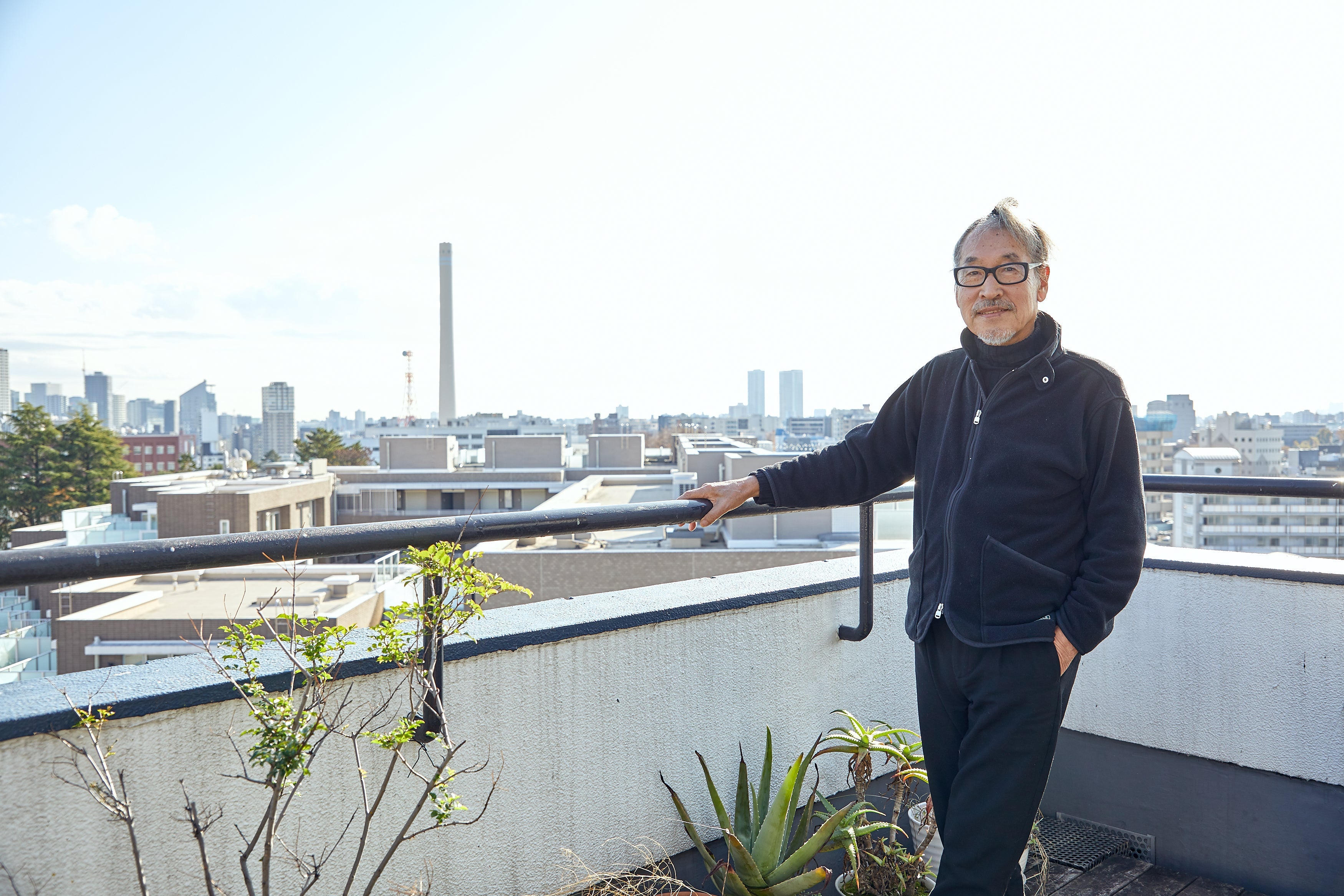
08. Artist: Aya Konno
Please tell us how you came to be an artist.
Konno: My family ran a printing company, so we had a lot of misprinted paper leftover. I would bind it myself to make sketchbooks and drew pictures all the time when I was little. Everyone used to say, "Ken will be a painter," so I didn't aspire to be one; I naturally thought I would become a painter.

Please tell us why you moved to England at 25.
Konno: When I was in junior high school, rock music was born as a genre. I didn't understand the English lyrics, but just listening to the sound thrilled me. So, in 1972, wanting to hear live rock, I went to London, which was the most vibrant city in the world at the time, for a month. I went to a live music venue called the Roundhouse, and the first rock concert I ever saw was Jeff Beck. I was so moved that I mistakenly thought I should live there, *chuckles*. So, the next year, I sold everything I owned and moved to London with a one-way ticket. But that's where my current wealth comes from. What I am now comes from starting from absolute zero, and that confidence is invaluable.
Please tell us how you became a successful artist in London from there.
Konno: I thought I had enough money to live for six months, but prices were so high that I ran out in about two months. So, I worked as a dish washer at a hamburger shop and secretly drew pictures of customers during my breaks. One day, an old man who was a customer caught me drawing, and I thought I was going to get scolded, but he said, "I'm bringing someone tomorrow, and I want you to draw them." The next day, I drew the woman he brought, and she was very pleased. Word spread, and many people started coming to the shop to have their portraits drawn. Among them was a famous manager named Ronald. He asked me to "show him other drawings I'd made," so I showed him many, and he said, "Let me borrow them," and took them all, *chuckles*. Then, a week later, he came back and got me a job illustrating six pages of autumn hair trends for a fashion magazine. I thought, "If I can do this job, I can succeed in London; if not, I'll be a dish washer for the rest of my life," and I drew with all my might. That led to me becoming famous when it was published in the magazine, and I was finally recognized as an artist. Ronald told me, "I'll get you work, so quit your dish washing job," and he managed me for the next eight years. Two years later, I got a work permit, and two years after that, I became the first Japanese person to obtain an artist visa in the UK.

Please tell us why you returned to Japan and what you have been doing since.
Konno: In the 1970s, London was where the most exciting movements were happening in the world. By the 80s, that shifted to New York, and artists from London began moving to New York and finding success there. I started getting messages from these artist friends saying, "New York is exciting. I'll write a recommendation letter for a green card, so come join us." I was packing to go to New York when I received a telegram from my mother, informing me of my father's death. I had never returned to Japan until then, so I felt a great deal of guilt. So, I gave up on going to New York and returned to Japan. After returning, I co-founded the advertising agency AD-media (now ad-comm) with Andreas, a German photographer I met, and last month marked its 35th anniversary. I left the company in 2014 to return to painting, but now it has 150 employees, and its clients are all European companies like BMW, Porsche, and TAG Heuer.
Please tell us if there is a consistent theme in your art production.
Konno: It's peacefulness. When I was in elementary school, there was a temple near my parents' house with a "Hell Room" and a "Paradise Room." The "Hell Room" had terrifying pictures all over the walls of people having their tongues pulled out, eyes gouged out, and blood drained. The "Paradise Room," on the other hand, only had a large lotus flower painted. What I wondered when I saw this was that people like negative things and can imagine various scary scenes, but they can't visualize positive or happy things. So, I challenge myself to paint beautiful and peaceful things.

Mr. Konno, you not only create art but also disseminate the spirit and aesthetic sense of Japanese culture, such as the tea ceremony and Iaido. What was the catalyst for this?
Konno: In London, artist friends kept asking me, "What position does Shintoism hold within you?" but at the time, I didn't even know the difference between Buddhism and Shintoism, so I couldn't answer. That was very embarrassing, and I knew no one would trust me if I couldn't answer. It's like saying you can't understand British culture if you don't know your own. I realized that if I wanted to work with them on an equal footing, I needed to truly understand Japan. So, when I returned to Japan, I decided to pursue the two things that samurai practiced: "bunbu" (literary and martial arts). "Bun" is the tea ceremony, and "bu" is Iaido. I started these thinking that by doing them, I would be able to answer the questions they asked and what they wanted to know. I've been doing the tea ceremony for over 20 years and am a master of Urasenke Chado, and I have a 5th dan in Tamiya-ryu Iaido. But I'm not doing this as a hobby; it's all for art.
Please tell us about the appeal and power of art.
Konno: Recently, I've been teaching art to future business leaders and business scholars. The reason they want to learn about art is that while in the past, hard work, accumulating knowledge, and gaining experience would lead to achievement, now it's essential to have the ability to create something new from nothing, to go from 0 to 1. That's the world of art, and art has that power.

Are there any particular routines you follow regarding sleep or daily life?
Konno: I don't adjust things to suit myself. I live in a way that I adapt to everything, including sleeping and eating. It's the same for animals, isn't it?
If you have a morning routine, please tell us about it.
Konno: As soon as I wake up, I go to the veranda, always look at the sun with my bare eyes, and say, "Thank you for another day of life." Then, I continue to chant, "I am happy, I am joyful, I am grateful. Thank you. I forgive." This makes me feel great from the morning. I'm 75 now, but I'm just full of gratitude every day.
How do you view the importance of sleep?
Konno: It's a rebirth. Through the act of sleeping, I believe I die once and come back to life. In fact, I'm prepared that I might not wake up tomorrow, *chuckles*. Every day, by sleeping, I am reborn, and I travel to various places in my dreams.

Text & Edit:Kazuhiro Hasegawa(no name books)Interview photos:Kazuhiko Tawara(magNese inc.)

What is sleep?

Started painting in childhood, moved to London in 1973. Obtained an artist visa and worked on album covers like Eric Clapton's "Just One Night" and movie images for Stanley Kubrick's "Barry Lyndon." Returned to Japan in 1981, established the advertising agency AD-media (now ad-comm), mainly involved in advertising and branding for European companies. Currently, he has left the company and is concentrating solely on his career as a painter.