







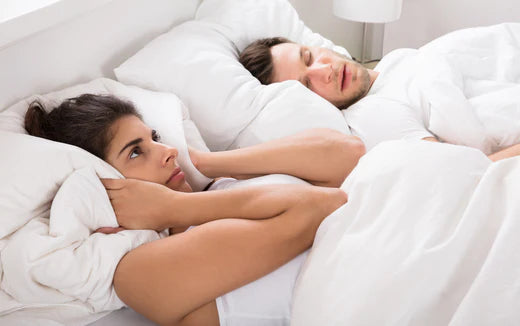
Learn about the causes and solutions for snoring to improve your sleep quality!
You might think, "Everyone snores, so it's fine." But if snoring potentially leads to serious health problems, you wouldn't want to ignore it, would you? In fact, snoring puts a significant strain on your body and accumulates health risks more than we imagine. It's important to understand why you snore, take appropriate measures for your condition, and improve your quality of sleep.
First, understand the causes of snoring!
"Causes of snoring" that are surprisingly common and close to home
The causes of snoring lurk in various aspects of daily life, such as drinking, fatigue, stress, and sleeping posture. For example, do you have any memories of disturbing others with loud snoring after drinking too much? When you consume alcohol, not only the muscles throughout your body but also the muscles in and around your mouth and tongue relax, narrowing the airway and causing snoring. The next most common cause is stress experienced in daily life. Feeling stress can lead to a disruption of the autonomic nervous system → shallow breathing → mouth breathing → snoring, creating a cycle.
Is snoring due to body structure or constitution?
Snoring can sometimes be caused by inherent body structure or constitution, such as a large tongue, poor bite, small jaw, or the influence of female hormones. People with a large tongue or small jaw tend to snore more easily because the tongue cannot fit in the jaw, preventing the airway from being secured. Also, while there's a strong image of men snoring, many women also snore. Female hormones work to tense the muscles that support the tongue. When female hormones decrease due to menopause or hormonal imbalance, this function becomes dull, and the muscles relax, making snoring more likely.
Understand and prevent health risks by knowing the types of snoring!
Snoring is divided into two types: simple snoring and sleep apnea syndrome. Depending on the type, health risks can arise, so it's important for those who snore or whose family/partners snore to understand the type of snoring. When you snore, your sympathetic nervous system continuously works to try and breathe, leading to a state similar to being awake during the day. If such sleep continues, your body becomes tired, and the negative effects of snoring on your body will appear.
What is "simple snoring," which is temporary and mild?
Simple snoring only occurs when accompanied by drinking or fatigue, so there is no accumulation of fatigue from snoring, such as daytime sleepiness, and it does not have a significant impact on health. Simple snoring can be improved by understanding the cause and reviewing lifestyle habits, but be careful as habitual snoring can lead to serious illnesses.
What is "sleep apnea syndrome," which has greater health risks?
In addition to simple snoring, there is snoring associated with sleep apnea syndrome (SAS). Sleep apnea syndrome refers to a condition where there are 30 or more instances of no breathing for 10 seconds or longer per night, or 5 or more instances per hour. If you wake up with a dry mouth or a throbbing headache, there's a high possibility you have sleep apnea syndrome. If sleep apnea syndrome continues, it can lead to sleepiness and lethargy not only during sleep but also during daily life, and in severe cases, it can cause serious illnesses.
Serious illnesses too! Health risks of snoring increase if left untreated
If snoring is left untreated, health risks increase. For example, a vicious cycle can occur: ① habitual snoring leads to accumulation of fatigue and stress → ② blood pressure drops → ③ steroid hormones are abnormally secreted to relieve stress (which have the effect of raising blood sugar) → ④ leading to diabetes. Also, sleep apnea syndrome can accumulate oxygen deprivation and damage to the brain due to stopped breathing, increasing the risk of dementia. In addition, frightening health risks such as arrhythmia, myocardial infarction, cerebral infarction, and anxiety disorders lurk in snoring. If you can relate, first understand the type of snoring and prevent pre-illness with measures suited to your condition.
If you notice snoring, take early action
Snoring countermeasures with pre-sleep acupressure massage
Acupressure massage for snoring, using a little time before bed, is easy to do and recommended. At the pulse points two finger-widths out from the Adam's apple on both sides, gently rock with your thumb and index finger about 80 times. This stimulation not only helps reduce excess fat in the neck but also suppresses inflammation and swelling in the throat, resolving the narrowness of the airway that causes snoring, making snoring less likely to occur.
Snoring countermeasures with sleeping posture
Sleeping in a balanced posture helps keep the airway open, which can suppress snoring. To sleep in a balanced posture, it's good to use a mattress designed for proper pressure distribution. Also, a pillow that is too high can compress the throat, making snoring more likely. The ideal pillow height is one that keeps your face and chest in a straight line.
Understand the cause of snoring, take action, and get quality sleep
It's surprising how many serious health risks snoring poses beyond what we imagine! Don't neglect snoring that affects not only the quality of your sleep but also your physical health. Understand the causes and countermeasures for snoring, and improve the quality of your sleep and life.