







What are the effects of REM and non-REM sleep on health?
Are you getting enough sleep?
To maintain your health every day, it's essential to regulate your body through diet and regular exercise and to alleviate fatigue. However, recent research shows that among diet, exercise, and sleep, sleep is the most important for health. But "sleep" isn't just about length; there are various types, such as sleep quality. What affects health is the sleep rhythm composed of REM and non-REM sleep.
What are REM and non-REM sleep?
What is REM sleep?
REM sleep, as its formal name "Rapid Eye Movement sleep" suggests, is a light sleep where the eyeballs move frequently, the brain is active, and the body is deeply asleep while the brain is awake. During this phase, people dream, and it's difficult to wake up even with sensory stimulation. REM sleep accounts for about 20% of total sleep, and this percentage increases on days when a lot of learning occurred, indicating its important role in processing memories and information. Recent research also suggests that REM sleep has an effect on alleviating mental fatigue. However, basically, REM sleep rests the body, and non-REM sleep rests the brain.
What is non-REM sleep?
Non-REM sleep, formally known as "Non Rapid Eye Movement Sleep" (sleep where the eyeballs hardly move), is divided into two stages: light sleep and deep sleep. As non-REM sleep progresses from light to deep stages, it leads to rest for the brain and sympathetic nervous system activity. The deep stage of non-REM sleep is the deepest level of sleep, and a subjective sense of refreshment is obtained by sustaining this state to some extent. This state is also called cerebral sleep, where growth hormone secretion and cellular metabolism occur. If a person is awakened during non-REM sleep, they feel groggy and often haven't dreamt. By having a good sleep rhythm that includes both REM and non-REM sleep without any deficit, it leads to the recovery of bodily stress and fatigue.
Symptoms caused by an imbalance in REM and non-REM sleep
Maintaining a good balance of REM and non-REM sleep leads to sound sleep. However, if this balance is disturbed by various factors, symptoms detrimental to health can occur. Even if you get enough sleep, a decline in sleep quality can lead to a state of not sleeping well, which is one manifestation of an imbalance in REM and non-REM sleep. When sleep quality declines, it affects the mind and body, leading to irritability that makes work difficult, feeling fatigued and unmotivated on a Monday morning, or obesity due to hormonal imbalances. In severe cases, it can lead to depression and lifestyle diseases such as diabetes, dyslipidemia, and high blood pressure. If these symptoms apply to you, the first step to achieving sound sleep and a healthy life is to understand and recognize your REM and non-REM sleep balance and rhythm.
Are you a short sleeper (less REM sleep) or a long sleeper (less non-REM sleep)?

Short sleepers and long sleepers
A person's constitution and sleep duration change significantly with age and lifestyle. Babies sleep most of the time, children sleep 10 hours, teenagers 8 hours, and people in their 20s 7 hours... sleep duration tends to decrease with age. Generally, people who sleep less than 6 hours are called short sleepers, and those who sleep more than 9 hours are called long sleepers. Most Japanese people are said to be short sleepers, and because their REM sleep is short and non-REM sleep is long, they often sleep deeply without dreaming. Conversely, long sleepers, who require more sleep than average, constitute about 5% to 10% of the Japanese population. They tend to take longer to reach deep sleep and often cycle through shallow sleep. Regardless of whether your sleep duration is long or short, there's no problem if you feel you've had sound sleep. It's a well-known fact that Napoleon was a short sleeper, while Einstein was a long sleeper. Neither was inherently right or wrong; it was simply their natural constitution. Since sleep duration and constitution are innate and vary from person to person, it's important to find a sleep rhythm that suits you.
What is the ideal balance of REM and non-REM sleep?
Balance of REM and non-REM sleep
Waking up feeling refreshed in the morning and feeling like you slept soundly is because there is a good balance between REM and non-REM sleep, and you've had quality sleep throughout the night. REM and non-REM sleep form one cycle, which typically repeats about 4-5 times until you wake up in the morning. Ideally, deep non-REM sleep should be about 100 minutes, light non-REM sleep about 200 minutes, and REM sleep about 100 minutes, totaling approximately 7 hours. To achieve refreshing sleep, it's best to wake up during REM sleep. We recommend sleeping for a duration that is a multiple of your personal REM and non-REM sleep cycle.
The body clock, deeply involved in sleep
The body clock plays an important role in measuring REM and non-REM sleep times. The human body clock is longer than 24 hours, and its misalignment is reset to 24 hours by waking up at a regular, fixed time every day and exposing oneself to sunlight. If you don't lead a regular life and don't expose yourself to sunlight, your body clock will shift by an hour each day, and at the same time, the rhythm of REM and non-REM sleep will also shift, disrupting the rhythm of physiological functions such as body temperature and hormone secretion. To lead a healthy daily life, it's important to wake up at a fixed time every day, expose yourself to sunlight, and reset your body clock.
Sound sleep methods tailored to your sleep rhythm
Sound sleep methods for short and long sleepers
For short sleepers to achieve quality, sound sleep, the key is how deeply and soundly one sleeps during the first non-REM sleep phase. Psychological anxieties such as being tired and wanting to rest but not having time to sleep, worrying about oversleeping, or fearing another sleepless night can be major impediments to deep sleep. For long sleepers, if they are getting good quality sleep at night, daytime sleepiness should not occur. However, if they are sleeping for long hours but still don't feel a satisfactory sense of sound sleep, they might need to re-evaluate their sleep quality. Long sleepers tend to have repeated shallow sleep, so how to achieve deep sleep is the key to sound sleep. For both short and long sleepers, it's important to first understand their appropriate sleep duration, create an environment conducive to sound sleep, and regulate their bodies.
Appropriate sleep duration
To find your appropriate sleep duration, first, try jotting down your bedtime and wake-up time for a week, along with how you feel when you wake up. The day you felt you slept most soundly within that week will be your optimal sleep duration. Divide that sleep duration by "5". "5" is the number of REM and non-REM sleep cycles in one night. The resulting number is the duration of one REM and non-REM sleep cycle for you. Waking up at a time that is a multiple of that cycle duration will lead to sound sleep with adequate sleep time. If you have a fixed wake-up time, you might want to adjust your bedtime by calculating backward using multiples of your cycle duration.
Creating an environment for sound sleep

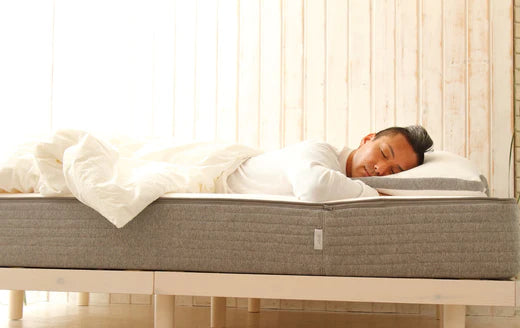
Once you know your appropriate sleep duration, the next step is to create an environment that promotes sound sleep. Bedding, such as mattresses, can be said to have the most significant impact on sleep quality. Choose something with a pleasant texture that makes you feel relaxed and eases anxiety. Mattresses with a Tencel top cover are highly recommended because they offer a stress-free, very comfortable feel, are quick-drying, and keep you comfortable even if you sweat. Also, to avoid disrupting your body clock, dim the room lights before bed and minimize the amount of light entering your eyes. Avoid looking at smartphones or computers that emit blue light for at least an hour before bedtime.
Light stretching before bed to prepare body and mind

A recommended method for achieving deep sleep is stretching before bed. Stretching has physical benefits, such as relaxing muscles and improving blood flow, and mental benefits, such as promoting relaxation by activating the parasympathetic nervous system, which leads to drowsiness. Lie on your back on the mattress, stretch your arms overhead as if to say "hands up," and simultaneously stretch your toes downward. Performing stretches with deep breaths helps regulate your breathing and leads to even sounder sleep.
A quality life with a sleep rhythm that suits you
The sleep rhythm, consisting of REM and non-REM sleep, varies from person to person. If you're not satisfied with your sleep, you might be living your daily life with the wrong sleep rhythm. Don't worry, just start by understanding and re-evaluating your sleep rhythm. For a better life, better sleep!