







Boosting Your Immune System Through Sleep—Things to Consider During the Coronavirus Pandemic
As the coronavirus (COVID-19) rages across the globe, the importance of sleep to our body's immune system has garnered significant attention.
To enhance resistance against viruses and diseases, boosting the body's immunity is crucial, and getting enough sleep at night is indispensable for this. Sleep can be said to be a natural immune booster.
This has been a well-known fact for a long time. When people catch a cold, they have always tried to recover by getting plenty of sleep. The relationship between sleep and the immune system has long been a subject of interest, and this continues among modern researchers.
To be clear, we are not claiming that sleep cures symptoms caused by the coronavirus. Unfortunately, an effective vaccine against the coronavirus has not yet been developed.
In the wake of the coronavirus pandemic, there is renewed interest in health and the function of immunity. In times like these, I would like to take this opportunity to briefly introduce the important role sleep plays in the human immune system.
How the Immune System Works
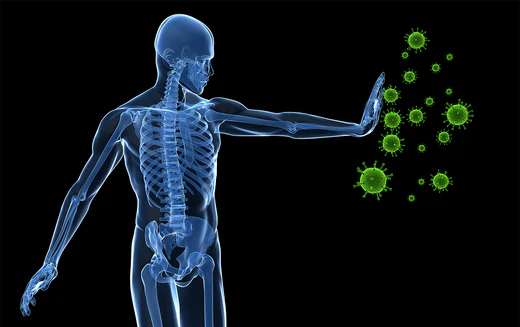
First, let's briefly review how the immune system works. The immune system is our body's natural defense system against disease-causing bacteria.
The immune system primarily has three functions:
- Detection and elimination of disease-causing bacteria and pathogens, such as viruses, parasites, bacteria, and fungi.
- Identification and neutralization of harmful substances entering the body from outside.
- Attack on abnormal cells such as cancer cells.
The immune system reacts to external substances like antigens and toxins, and creates special cells, or antibodies, to eliminate them. The immune system retains information about the antibodies it has created, and can use them to deal with similar problems in the future. The fact that you are less likely to get diseases like chickenpox after having them once is due to this remarkable characteristic of the immune system.
The Impact of Sleep on the Immune System
As seen above, the immune system is a very excellent defense mechanism, but sleep is essential for it to function effectively.
If we compare the immune system to a soccer coach, sleep can be likened to halftime in a game.
A good coach understands the characteristics of the opposing team throughout the game and gives instructions at halftime to adjust the movements of their own players. Sleep is the "halftime" for the immune system to identify threats to the body and formulate appropriate strategies. Through this "halftime" of sleep, the immune system can give appropriate instructions to each cell (player) and confront disease-causing antigens. Insufficient sleep means there isn't enough time for such adjustments, leading to the body succumbing to illness.
Promotion of T-cell Production by Sleep
Sleep strengthens the immune system by promoting the production of T-cells.
T-cells are a type of white blood cell that plays a crucial role in the immune system's function against viruses. They have the function of attacking and destroying virus-carrying cells, making T-cell activation essential for the body to fight disease.
And for T-cells to function, it is necessary to get quality sleep at night.
Recent research has shown that people who had sufficient sleep at night had a higher level of T-cell activation compared to those who did not. On the other hand, for those with insufficient sleep, T-cells could not effectively function against viruses, weakening the body's ability to fight disease.
Strengthening the Immune Response through Sleep
For the body to fight illness, it is important for the immune system to react quickly to antigens, and sleep plays a major role here too. Quality sleep promotes a swift immune response.
The immune system can react quickly to antigens with the help of multifunctional proteins called cytokines, and these cytokines are effectively produced by going through four cycles of REM and non-REM sleep.
Cytokines primarily have two preferential functions:
- Facilitate intercellular communication
- Guide immune cells to antigens and deal with them
In other words, cytokines play the role of guiding immune cells towards antigens after being instructed to fight viruses.
If sleep is insufficient, this series of functions does not work well. This is because our bodies produce cells and proteins to fight illness by getting enough sleep at night. If sleep is insufficient, cytokine production is delayed, and the body becomes unable to effectively fight viruses.
Fighting Colds with Quality Sleep
When you catch a cold, your doctor (or your mom) will likely advise you to "get plenty of sleep."
This advice is backed by numerous studies. Sleep may even be the single best way to treat or prevent a cold.
Last year, researchers at the University of California, San Francisco, focused on the effectiveness of sleep against the common cold and revealed that the quality of sleep is the strongest factor in determining whether one catches a cold when exposed to the virus.
Their study recorded the sleep patterns of 164 subjects for one week. The subjects were then isolated in hotel rooms and administered a cold virus via nasal drops.
As a result, it was found that subjects who slept less than 6 hours were 4.2 times more likely to catch a cold compared to those who slept an average of 7 hours or more.
This study suggests that sleep quality is more important than other factors such as age, stress levels, race, education, income, and smoking habits when predicting the likelihood of subjects catching a cold. It demonstrates how important sleep is in fighting common illnesses like the cold.
The rapidly spreading threat of the coronavirus has made us acutely aware of the irreplaceable value of health. Sleep plays a significant role in enabling our immune system to function effectively and keep our bodies healthy. Precisely because of this situation, it is crucial to make an effort to get good quality sleep.
To get the latest posts from gugu Magazine and special offers related to sleep, subscribe to our newsletter!




%20rages%20across%20the%20globe,%20the%20importance%20of%20sleep%20to%20our%20body's%20immune%20system%20has%20garnered%20significant%20attention.%0ATo%20enhance%20resistance%20against%20viruses%20and%20diseases,%20bo...)