





What do you sleep in? What you wear to bed can be a source of stress while you sleep!
For busy modern people, ensuring sufficient sleep is crucial for quality rest. It's tough to frequently wake up in the middle of the night due to excessive tossing and turning or discomfort. Did you know that what you wear to bed significantly affects "sleep quality"? Are you a pajamas person, or do you prefer a T-shirt?
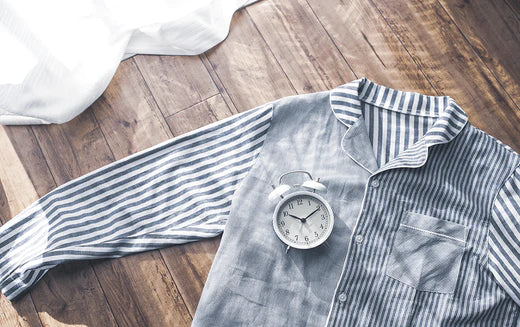
Since clothes come into direct contact with your body, they can sometimes cause stress depending on the attire (material, design, etc.). While sleepwear preferences vary from person to person, many people sleep in a casual T-shirt in addition to typical pajamas. While there are strong preferences for pajamas, T-shirts, or even underwear, classic pajamas are designed for sleep, making it easier to toss and turn and reducing the risk of back pain. Although mattress compatibility also plays a role, back pain can be exacerbated if it's difficult to turn over and you remain in the same position for extended periods, increasing the burden on your lower back. That's why pajamas are a fundamental element of good sleep hygiene and a choice for achieving quality and deep sleep.
Two key points for quality sleep are "body temperature regulation," as a lower body temperature leads to deeper sleep, and "balancing the autonomic nervous system" through daily life. Changing into pajamas before bed creates a "mindset" of "It's time to sleep!" Choosing pajamas made of materials that don't hinder heat dissipation and are not too restrictive is a win-win solution for body temperature regulation. For deep sleep, it's crucial to effectively switch between being awake and sleeping. Moreover, changing into your favorite pajamas might make your partner happier and sleep better than a worn-out T-shirt that tends to look drab!
【Choosing pajamas for comfortable sleep】
- A size that is not too tight or too loose
- 100% cotton or silk, which are excellent at moisture absorption and quick-drying
- Dust-free material
Don't overlook your body's signals for a comfortable awakening every day

Let's also look at sweating during sleep. For quality sleep, our body temperature gradually begins to cool down after we get into bed. There are two types of body temperature:
- "Skin temperature": The surface temperature of the body, measured in the armpit or mouth.
- "Core body temperature": The temperature of internal organs, including the brain, which is about 1 degree higher than skin temperature to maintain life.
When we fall asleep, our body releases heat from the skin's surface to lower the core body temperature, and the entire body enters relaxation mode. When you start feeling sleepy, you might notice your hands and feet getting warm; this is the increase in skin temperature to lower the core body temperature.
Sweat is a physiological phenomenon for regulating body temperature, but night sweats during sleep can sometimes be a sign of poor health. What needs attention is when unexplained sweating occurs even in room temperatures around 26℃, which is considered optimal for comfortable sleep. In particular, if you have a strong awareness of not being able to sleep and wake up even when trying to fall asleep, it could indicate menopause or an underlying illness. Insomnia is a common symptom of menopause, characterized by difficulty falling asleep, waking up in the middle of the night, or waking up before the alarm. Increased sweating or new night sweats are also indicators of menopausal changes. Additionally, autonomic dysfunction is an illness often caused by stress and lifestyle habits, and night sweats are not uncommon as one of its symptoms.
It's not an issue if you temporarily sweat after having bad dreams or drinking alcohol, but if you sweat continuously every day without reason, be cautious. It could be a sign that your internal organs are in distress, so if you're consistently far from getting good sleep, it's best to see a doctor early. Even if it's not a serious illness, if you're enduring unbearable stress, physiological phenomena like discomfort during sleep and sweating can occur, hindering good sleep.
For women, it's known that the amount of sweat temporarily increases as a physiological phenomenon before menstruation. Other causes can include thyroid issues or infections, so be careful not to leave unexplained symptoms unattended. Even if the cause isn't serious, the stress of not being able to sleep can lead to more stress, causing irritation and making good sleep even more elusive. The next day, you'll be plagued by drowsiness all day, and decreased concentration can interfere with daily life. Health issues often lead people to underestimate or overlook signs, and missing them means losing the chance to address them. So, if you notice something, consult a doctor promptly to find a solution.
Summary
Quite often, a mismatch between bedding and sleepwear can be the cause of sleeplessness. Reviewing your sleepwear and sleep cycle, and asking your partner about your condition while sleeping, can contribute to deeper sleep and improved sleep quality.