








Can't stop yawning during the day? 7 causes and 3 solutions
When you're tired or sleep-deprived, you might find yourself yawning uncontrollably. It's easy to worry and wonder if it might be a sign of an illness.
According to the latest research, it turns out that sleep deprivation is not the only cause of yawning. The reasons vary, from fatigue and boredom to physical ailments.
Furthermore, many of you may have experienced the embarrassment of not being able to stop yawning during important occasions such as meetings or weddings.
In this article, gugu Sleep, the sleep company, will introduce "7 hidden causes of yawning" and "3 clever tricks to help you stop yawning"!
Still a Mystery? The Unexpected Role of Yawning
Yawning is a physiological phenomenon observed not only in humans but in almost all vertebrates.
However, many aspects of the biological significance of yawning remain unexplained, and it is still shrouded in mystery.
Until recently, the prevailing theory was that yawning occurred to alleviate oxygen deficiency in the brain.
However, it has been found that the frequency of yawning does not increase even when the amount of carbon dioxide in the air rises. Therefore, the current mainstream thinking is that there are other causes for yawning.
Is yawning a brain cooldown? Biological Significance 1: Brain Temperature Regulation
Currently, the most prominent theory is that yawning plays a role in controlling brain temperature.

In 2010, research using rats discovered that yawning lowers brain temperature by 0.4 degrees Celsius.
Based on this research finding, Dr. Gallup of SUNY Oneonta suggested that yawning cools the blood in the brain, helping to maintain it at an appropriate temperature for activity.
When brain temperature rises, abilities such as attention, memory, and reflexes decline.
Yawning stretches the blood vessels in the face, allowing hot blood to be expelled from the brain. Additionally, inhaling cool air is also believed to have a cooling effect on blood vessels.
These two mechanisms suggest that yawning has the effect of activating a brain that has become sluggish due to heat.
Why is yawning contagious? Biological Significance 2: Communication with Peers
Another theory suggests that yawning is not merely a physiological phenomenon, but may have served as a form of communication.
When you see a person or animal yawning, you often find yourself yawning too, don't you?
The "contagion" of yawning is actually a phenomenon that occurs not only among humans, but also among animals that live in groups, such as dogs, wolves, monkeys, and parakeets.
Furthermore, it has been found that yawning is more contagious among close individuals, such as family and friends, than among strangers, indicating that "empathy" is a significant factor.
The exact cause of contagious yawning is still not fully understood.
Researchers have put forward various hypotheses, such as to signal to companions that it's time to sleep, or to strengthen bonds between group members.
In any case, it seems certain that yawning is closely linked to communal living.
7 Hidden Causes of Yawning
Now, let's look at the 7 possible causes when you can't stop yawning.
Sleep Deprivation and Fatigue

The most common cause behind uncontrollable yawning is sleep deprivation or physical fatigue. Research has also proven that yawning and sleep are deeply related.
Some research findings suggest that yawning increases brain activity, having a similar effect to consuming caffeine. It's possible that yawning when sleep-deprived is a way to "wake up" a brain that has become less active due to fatigue.
Generally, the recommended amount of sleep per day is 7-9 hours. However, even if you sleep for more than 7 hours, poor sleep quality can lead to symptoms of sleep deprivation.
Even if you think you're getting enough sleep, it might be a good idea to review your sleep duration and quality.
Boredom
Many of us have likely experienced trying to suppress a yawn during a long meeting or a boring lecture.
Scientifically, it has been proven that the frequency of yawning increases during monotonous tasks such as driving a car, watching TV, or listening to a lecture.
Being bored means that the brain is not being stimulated.
If this state continues, the ability to detect dangers in the surroundings decreases, which can be fatal in the natural world.
Perhaps we instinctively yawn to restore our diminished awareness.
Stress
As mentioned earlier, yawning is believed to be related to brain temperature regulation.
Additionally, it is known that when experiencing severe stress or anxiety, the brain's ability to maintain a normal temperature weakens, leading to an increase in brain temperature.
If you are sleeping well but can't stop yawning during the day, it's possible that stress has accumulated unknowingly.
Why not try incorporating stress-relieving habits into your daily life, such as sports or a half-bath?
Changes in atmospheric pressure
In fact, the human body is very sensitive to changes in atmospheric pressure.
If you yawned when riding on an airplane or elevator, it might be your body adjusting to the change in atmospheric pressure.
When the surrounding air pressure changes rapidly, the pressure balance inside your ears gets disrupted, making it difficult to hear.
When you yawn or swallow on an airplane, you might hear a "pop" sound in your ear, and the feeling of clogged ears goes away, right?
This means that the eustachian tube, which is normally closed, has opened, and the pressure inside and outside the eardrum has returned to normal.
Hunger
It has been found that yawning is not only caused by fatigue and lack of sleep, but also induced by hunger.
When hungry, blood sugar levels drop, and brain activity slows down.
From this, it is speculated that yawning occurs reflexively to restore diminished brain function.
Additionally, some research shows that yawning also occurs when dehydrated.
Overthinking about yawning
Yawning is known to be induced by psychological factors such as "empathy" and "stress."
But did you know that just thinking about yawning can sometimes trigger a yawn?
According to one research study, 38% of people instructed to think about yawning yawned within 30 minutes.
Perhaps some of you have yawned just by reading this article.
Illness or poor physical condition
If you suddenly can't stop yawning, it could rarely indicate an underlying illness or poor physical condition.
If an illness is the cause, other symptoms often appear in addition to yawning, so pay attention to any changes in your health. If you experience symptoms such as sudden headaches or chest pain, do not hesitate to seek medical attention.
Yawning can appear as a symptom or precursor to the following conditions:
- Sleep disorders
- Migraines
- Heatstroke
- Side effects of antidepressants
- Myocardial infarction
- Multiple sclerosis
- Cerebral infarction
How to Deal with Uncontrollable Yawning
If you can't stop yawning during an important meeting or formal event, you can suppress it using the following methods:
Cool your forehead or neck
The cause of yawning is an increase in brain temperature. This means that, conversely, to suppress yawning, you should cool your head.
Dr. Gallup's research, mentioned earlier, showed that cooling the forehead also reduced the frequency of yawning.
Applying a cooling sheet or a damp towel to your forehead or neck can help release heat from the brain and is expected to stop yawning.
Take deep breaths through your nose
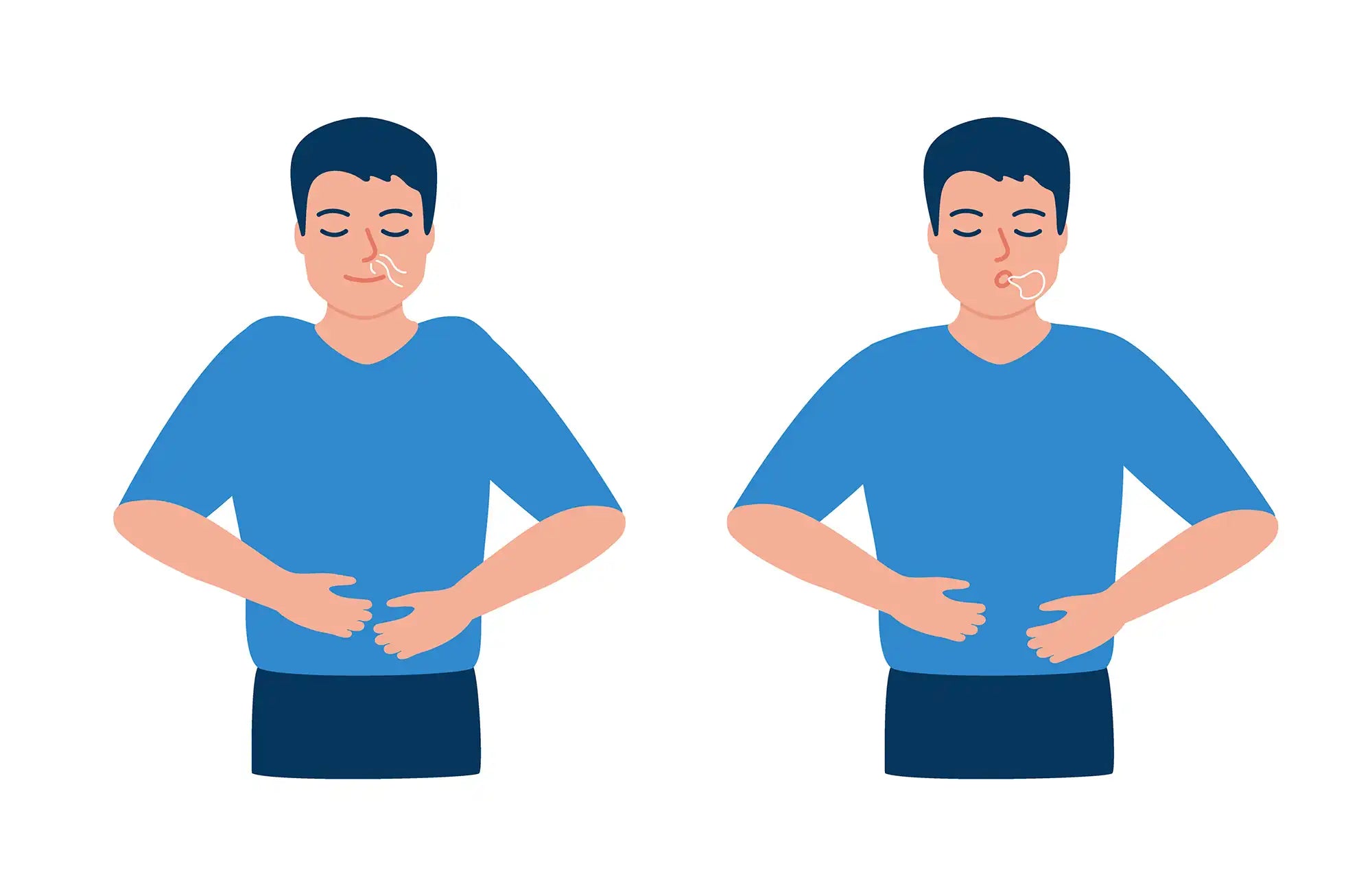
If you don't have a way to cool your head immediately, simply taking slow, deep breaths through your nose can help suppress yawning.
Inhaling cool air through your nose is also expected to have a brain-cooling effect.
There is also research suggesting that breathing through the nose for one minute can have a cooling effect of up to 0.1 degrees.
Light Exercise
If you find yourself yawning frequently during long hours of work or study, it might be a good idea to take a short break and engage in some light physical activity.
Light exercise can not only help relieve stress but also stimulate a sluggish brain, preventing yawns.
Summary
How was it? Yawning is often seen as a sign of lack of sleep or fatigue, but in reality, it is said to have various causes and to be done with the purpose of lowering brain temperature.
In most cases, there is no serious illness hidden, but if you notice any other changes in your physical condition in addition to yawning, do not hesitate to seek medical attention.