





What are the Best Mattresses for Back Pain and Stiff Shoulders? The Deep Connection Between Sleep Quality, Back Pain, and Stiff Shoulders
Do you ever wake up in the morning with a sore back or shoulders, or feel generally sluggish? Perhaps you spend all day in the same position at your desk job, worsening your back pain and stiff shoulders, or you constantly use your smartphone whenever you have a moment, leading to poor posture that strains your neck and back, causing back pain and stiff shoulders. While there are many daily activities that cause back pain and stiff shoulders, it's also crucial to pay attention to your sleep, which accounts for one-third of your life. This is because the cause of back pain and stiff shoulders can also lie in your bedding, such as your mattress.
Causes of back pain and stiff shoulders

Causes of back pain
Back pain is so common it's considered a lifestyle disease, with most people having experienced it at some point. Since humans stand on two legs, the weight of the head and torso concentrates on the lower back. Maintaining the S-curve of the spine when standing upright helps alleviate the burden on the lower back. However, if you work with a hunched back or stooped posture for extended periods, your spine can become misaligned, compressing nerves around the waist and causing pain. Furthermore, nerve compression can impede blood circulation, leading to an accumulation of muscle fatigue substances, resulting in stiffness and pain. This symptom can be caused not only by daily posture but also by sleeping posture. It is also said that many cases of back pain stem from mental stress rather than just physical causes. This is because the pain control system can be disrupted by mental influences such as stress, leading to the onset of back pain.
Causes of stiff shoulders
You might not normally notice it, but the human head weighs approximately 5-6 kg, and it is supported by the neck and shoulders. Even in a normal state, your shoulders are under strain. The common causes of stiff shoulders are said to be "posture," "eye strain," and "mental stress." Similar to back pain, prolonged periods in the same, especially poor, posture like slouching can lead to muscle fatigue from the neck to the shoulders. This impedes blood circulation, resulting in stiff shoulders. Eye strain occurs when you constantly look at bright screens from computers or smartphones, or small text, causing the eyes and surrounding muscles to become tense. This fatigue then extends to the neck and shoulders, leading to stiff shoulders. Also, when working on a computer, you tend to blink less than usual, and dry eyes can easily lead to stiff shoulders from eye strain. Regarding mental stress, which is common in daily life, when people feel stress, the sympathetic nervous system becomes active, which causes muscle fatigue even when not doing anything, leading to stiff shoulders.
Back pain and stiff shoulders caused by sleep
Back pain and stiff shoulders are said to be common due to the structure of our bodies. Whether eating or working at a desk, we are constantly supporting our heavy heads, keeping the muscles around our lower back and shoulders in a state of tension. To relieve this state, we sleep to rest our bodies, but in many cases, we unknowingly accumulate strain on our bodies due to our sleeping posture on the mattress, leading to back pain and stiff shoulders. First, let's re-examine your sleeping posture on your mattress.
The relationship between back pain/stiff shoulders and mattress sleeping posture

Back pain and mattresses
Since the body's weight tends to concentrate on the lower back, reducing this burden is key to alleviating back pain. As we mentioned in our blog on low-resilience and high-resilience mattresses, if a mattress is too firm, parts of the body such as the lower back are pressed against it, and areas with higher pressure (roughly 8% for the head, 33% for the chest/back, 44% for the lower back/hips, and 15% for the feet) tend to bear more strain. Therefore, a mattress that relieves pressure on the body and provides support is recommended. A mattress that varies its support based on different body parts is particularly ideal.
Back pain and sleeping posture
If you wake up in the morning feeling a dull ache in your lower back, there's a high probability that your sleeping posture is causing your back pain. Sleeping postures vary depending on your mood and individual habits, but it's important to understand how each posture affects your body. Sleeping on your stomach is said to be a posture that easily causes back pain because it creates an exaggerated arch in your lower back. Additionally, lying on your stomach compresses your chest, which can impair breathing, and puts a strain on your neck. Sleeping on your back is a posture that puts less strain on your lower back, but if the mattress is too firm, your lower back can sag, putting significant pressure on it. If there's a gap where you can put your hand under your lower back when lying on the mattress, it's too firm and can lead to a sleeping posture that strains your back, so be careful. Sleeping on your side is a posture that puts less strain on your body, which is why it's recommended for pregnant women. However, if you stack your knees, your body will try to compensate for balance, causing muscle tension that can also lead to back pain.
Stiff shoulders and mattresses
When we think of stiff shoulders, we often associate them with desk work, but the influence of bedding such as mattresses during sleep is also a major cause. When we sleep, the chest and back are the areas that experience the most pressure after the lower back and hips, so our shoulders are under strain even during sleep. Bedding, such as mattresses, can alleviate this strain. In particular, the height of the pillow greatly affects the body's posture when it comes to stiff shoulders, so using a pillow of an unsuitable height can strain the shoulders, leading to or worsening stiff shoulders.
Stiff shoulders and sleeping posture
The most effective sleeping posture for stiff shoulders is sleeping on your back. This is because sleeping on your back reduces pressure on your shoulders and the surrounding muscles, allowing them to relax. In addition to reducing strain on the shoulder area, sleeping on your back keeps your chest uncompressed, allowing for a comfortable posture and easier breathing, which also aids in recovery from fatigue. Sleeping on your stomach is something we tend to do at the end of an exhausting day, but turning your face to either side can cause cervical spine misalignment, putting a strain on your shoulders and the surrounding muscles. Sleeping on your side places your body weight on one shoulder joint, which can lead to stiffness and pain in the shoulder area and shoulder blades. Furthermore, putting strain on only one side can cause body distortion, making your shoulders more susceptible to strain and poor circulation, thus exacerbating stiff shoulders. Since we spend one-third of our day sleeping, the impact on our bodies varies significantly depending on our sleeping posture and bedding, such as mattresses.
How to improve back pain and stiff shoulders

Mattresses that improve back pain and stiff shoulders
Maintaining the S-curve of your spine during sleep, which is a posture that doesn't strain your body, is effective in improving back pain and stiff shoulders. A good mattress for back pain and stiff shoulders is one designed with pressure distribution in mind to support the pressure on each part of your body. This type of mattress changes its support strength according to the pressure on different body parts, allowing it to maintain the S-curve of your spine and reduce the burden on your lower back and shoulders during sleep.
Sleeping postures to relieve back pain and stiff shoulders
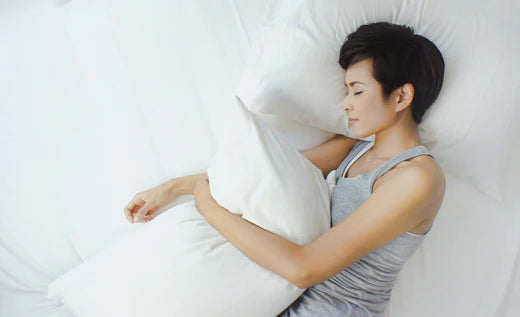
When sleeping on your back, try placing a pillow or cushion under your knees. Slightly raising your knees while on your back can relax your lower back. When sleeping on your side, it's also a good idea to hug a body pillow (but not so much that you slouch) and place a cushion or pillow between your knees. This eliminates the need to balance, taking the strain off your lower back.
Foods effective for back pain and stiff shoulders
Vitamin E, found in almonds, sesame, soy products, and eel, helps improve poor blood circulation, which can cause back pain and stiff shoulders. It not only improves blood circulation but also helps regulate autonomic nervous system function, making it highly recommended. Citric acid, known for its role in fatigue recovery, also helps alleviate muscle fatigue and is an effective nutrient for back pain and stiff shoulders. Common foods rich in citric acid include citrus fruits, pickled plums, vinegar, strawberries, kiwis, and pineapples. Since there are opportunities to improve back pain and stiff shoulders through your daily diet, please give them a try.
To improve back pain and stiff shoulders, let's start by re-evaluating your sleep quality!
Back pain and stiff shoulders are symptoms that are unavoidable due to our body's structure. That's why it's important to actively support your body with bedding like mattresses during sleep to reduce the strain on your body!