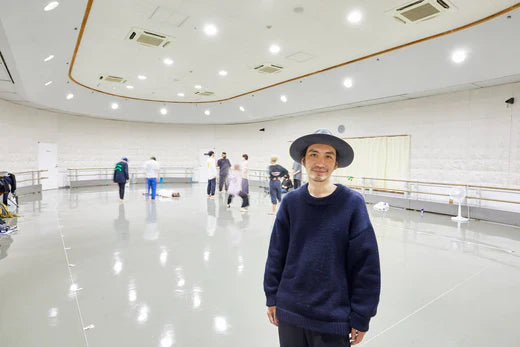




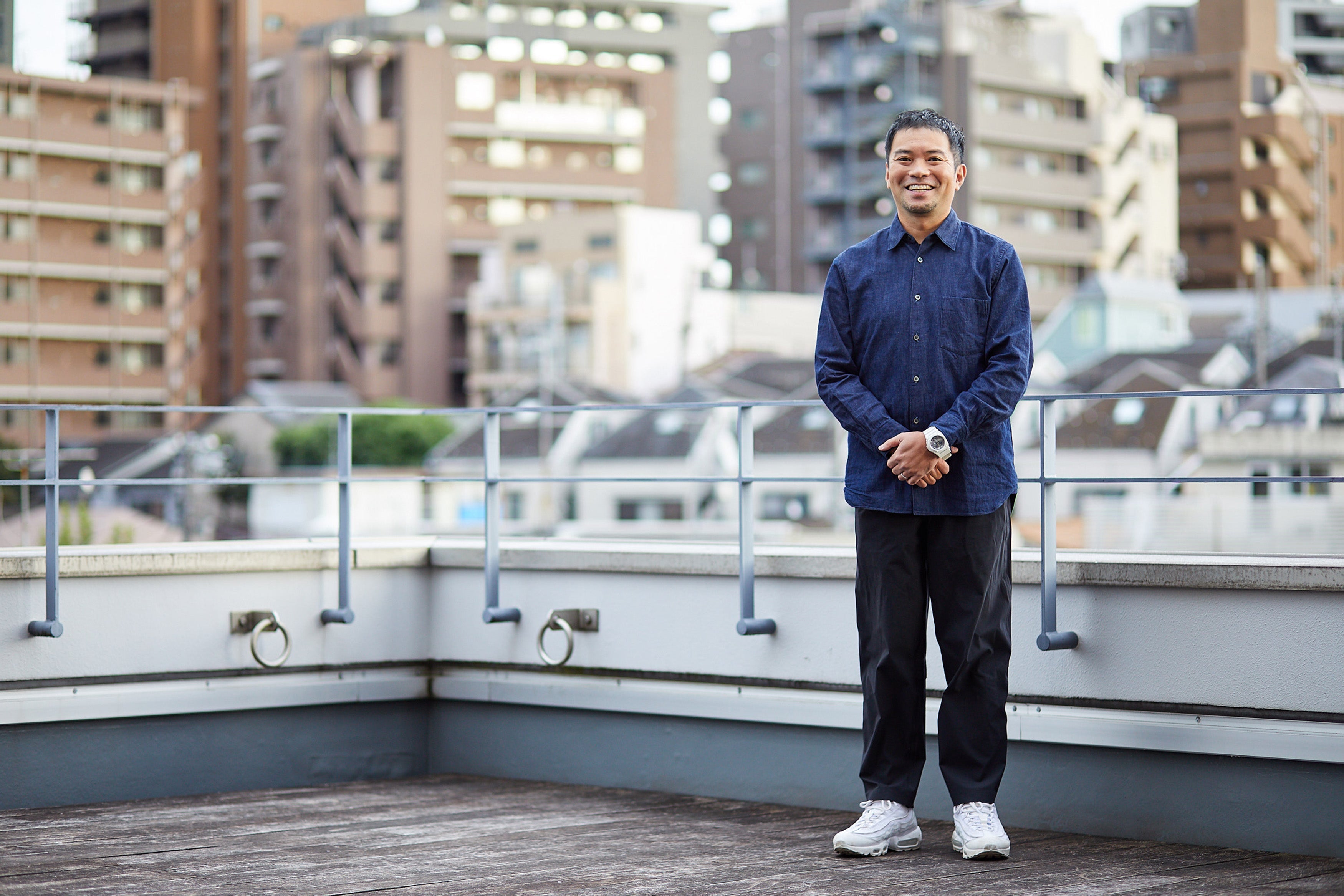
06. Takaaki Murase, Representative of Design Firm nanilani
Please tell us about how you came to establish your own design firm.
Murase: After graduating from university, I joined a design company. There, I met a colleague, and together we went independent and launched nanilani. I was the designer, and my partner was the editor, so at first, it was like a mini production company that handled corporate advertising, page-based content involving editing, and editorial design for magazines. From there, I started thinking that, instead of coming from an art or design school, my background in economics at university could be leveraged to combine economics and business with design. I wanted to do branding work where our creativity would be useful in areas closer to corporate strategy and management, and where we could truly find social value. It was also around the time when branding was gaining attention in the world, so we gradually started receiving more and more consultations of that nature.
What work has left a lasting impression on you?
Murase: At the time, JINS was still a growing company, and I had the opportunity to work on their branding. Large advertising agencies handled the production of commercials and advertisements, so I was in a position similar to a creative director. I was involved in quite a deep level of work, including daily sales promotions, VMD, in-store design, packaging design, eyewear product development, and improving the customer experience. At the same time, I was also fortunate to be involved with the management team, including the president, in discussions about strategies for winning in the market and business expansion. When I first worked with JINS, they only had about 50 or 60 stores, but now they have 660 stores worldwide, their sales have grown from 6 or 7 billion yen to 60 billion yen, and their number of employees has multiplied. It was a huge experience to be able to accompany them through such rapid growth.

Please tell us how you started the Japanese confectionery brand "Nakamata" as a new business.
Mr. Tanaka, the president of JINS, is from Maebashi City, Gunma Prefecture, and is involved in activities to revitalize the region. I supported him on the creative side, and he wanted to transform the shopping street, which had become a shuttered street, back into a bustling area filled with people. I was involved in attracting various shops and planning to bring in young people who wanted to take on challenges and create new content, so I frequently traveled to Maebashi City for business trips. One day, President Tanaka asked me, "Murase-san, why don't you try something fun in Maebashi?" Since I had the opportunity, I decided to do something and purchased a corner of that shopping street. However, at that time, I had no idea of opening a Japanese confectionery shop. But I thought it would be nice to have a souvenir or specialty confectionery from that area, so I decided to venture into the confectionery business. On the other hand, among the many design companies that handle branding, I felt that running my own shop would build trust, and I wanted to pursue a business that synergized design and food.

Why did you choose dorayaki?
We were aiming for a specialty confectionery, so we decided on dorayaki, inspired by the circular city emblem of Maebashi City. To put it extremely, if you sandwich something with dough, it's dorayaki, so in a sense, we viewed dorayaki as a platform and incorporated the tastes of cakes and Western confectionery. For example, we made the dough fluffy, and instead of red bean paste, we sandwiched pudding. We thought it would be better if it wasn't just delicious but also visually impactful, making people wonder, "Is this really dorayaki?" We developed dorayaki with a similar approach to pancakes. Also, when constructing the store, as part of a new experience, we made it entirely glass-walled so customers could watch the dorayaki production process. Fortunately, a video of the dorayaki making went viral on social media, and queues started forming the very next day.

What do you think are the rewards and attractions of your work?
Murase: There are customers who are delighted by Nakamata's sweets, and clients who are happy through design. The fact that what I love to do can benefit society is perhaps my greatest reward and driving force.
How many hours do you usually sleep?
Murase: I usually go to bed around 1 or 2 AM, and since my children wake up before 6 AM, I try to get up with them. After dropping them off at school, I think about going back to sleep, but work often gets busy, and I end up not being able to sleep. So, I typically get about 4 or 5 hours of sleep.
How do you view the importance of sleep?
When I was younger, I used to cut down on sleep to work more, believing there were only 24 hours in a day. But I don't think that way at all anymore. However, I currently don't have a lifestyle where I can get a consistent 7 hours of sleep, so I'm dissatisfied with that and want to improve it. To compensate, I try to take a 15-minute nap to refresh myself. Recently, there are wearable devices that track sleep, right? Hearing about those makes me want to improve the quality of my sleep a bit more.

How do you spend your days off and what methods do you use to refresh yourself?
Murase: Baseball with my kids. I have three sons, and if I don't let them play baseball on holidays, things get out of hand, he says with a wry smile. They belong to a local baseball team, and I teach and look after not only my own sons but also other children. I've never really been involved in community activities before, but I do this with the intention of contributing a little to the community. Now, it's both my hobby and my way of refreshing myself.
Do you have any future life goals or visions?
Murase: It's incredibly enjoyable for me to leverage my unique strengths and abilities to help others, so I want to continue doing that. For instance, while there are limited Japanese designers who can excel globally, I believe Japanese confectionery has the potential to compete worldwide. From a global perspective, Japanese confectionery is a strength of mine as a Japanese person, so I think it would be interesting to expand globally, and that's something I want to achieve.

Text & Edit:Kazuhiro Hasegawa(no name books)Interview photos:Kazuhiko Tawara(magNese inc.)

What is sleep?

Born in Nagoya City in 1978. Established design firm nanilani Co., Ltd. in 2005. Aims for broad design, including brand strategy and VI development. Since 2013, he has been involved in revitalizing Maebashi City, and in 2018, opened "Nagomu Kashi Nakamata" in Maebashi City. In 2020, he established Sweet Co., Ltd. and fully entered the confectionery business.
nanilani: http://www.nanilani.com
nakamata: https://www.nkmt.jp
hanakikyo: http://hanakikyo.com