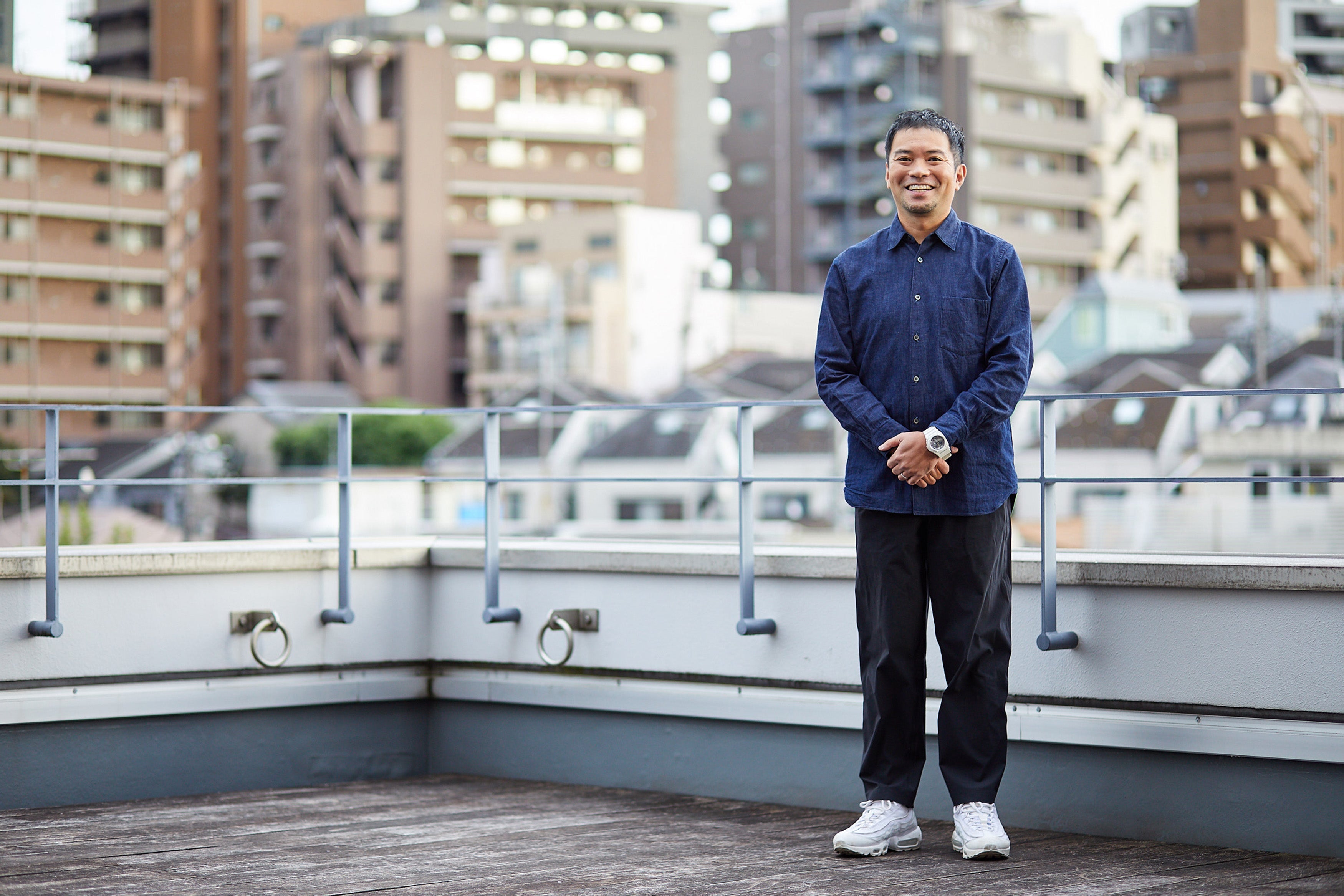








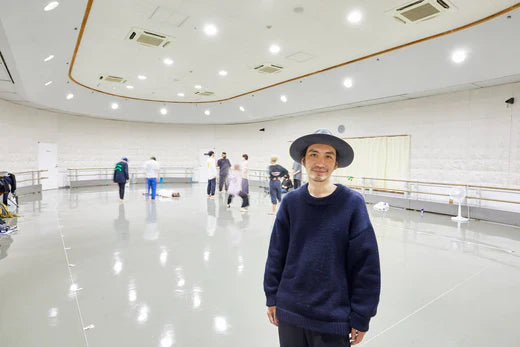
05. Choreographer/Dancer Ryo Noguchi
Please tell us what made you start dancing.
Noguchi: The club I went to, Club HEAVEN in Yokohama, is now closed, but a friend of mine was performing there, so I went to a late-night club for the first time. At the end of that event, Skeeter Rabbit, a member of the legendary dance crew "Electric Boogaloos" from LA, appeared. His dancing was truly amazing and cool, and it made me want to start dancing. I was 18 at the time, and I remember being very excited.

Please tell us about the formation of "WOOMIN," which later became a world-renowned dance group, and its activities.
Noguchi: At first, I practiced alone in front of building windows and train station windows at night. Gradually, I made more friends, and "WOOMIN" was formed with the people I met there. There was a dance contest in a certain magazine, and the desire to be featured in the magazine if we won was the reason for our formation (chuckles). After that, we participated in various dance contests and achieved good results, which raised our profile, and we started to be invited to events and shows as guest dancers. Then, we were selected for a UNIQLO fleece commercial, and that commercial went viral both domestically and internationally on YouTube, which was just starting to become popular at the time. This led to us appearing in music videos for Missy Elliott and Martin Solveig, and participating in their tours. Eventually, our individual directions diverged, and we decided to pursue different paths.
What kind of activities did you engage in after WOOMIN?
Noguchi: I wanted to pursue dance more purely, so I became engrossed in dance battles where we would improvise and compete. At the time, I was making a living as a dance instructor, but I thought that if I didn't win dance battles, I wouldn't attract students, and I couldn't survive if I couldn't impress people with my solo dancing. In addition to street dance, I also became interested in other dance forms like djembe, ballet, jazz, modern, and contemporary, so I even went to New York to experience authentic dance culture. I was around 27 at the time, and that's when I decided to make dance my profession.

Please tell us about how you came to join the performance unit "WORLD ORDER" and what led you to become involved in choreography and direction.
Noguchi: Genki Sudo contacted me because he wanted to work with the people who danced in the UNIQLO commercial when he was starting WORLD ORDER. As chief choreographer, I was in charge of composition, staging, live performance direction, and music arrangement to match the dances. Of course, Sudo-san's art direction, centered on the strong, analog Japanese worldview of salarymen in suits, was the core, but my role was to maximize WORLD ORDER's appeal by directing them to perform animation dance with expressionless faces. I put in so much effort that I was ready to give up if it didn't succeed, and I devoted my entire life to it. So, this experience became the catalyst for me to work as a director and choreographer.
Are you mainly focused on choreography now?
Noguchi: Besides choreographing commercials and such, I'm also serving as the director for the LIFULL ALT-RHYTHM team, which is competing in the professional dance league "D.LEAGUE." Also, since I love video production, I create a variety of videos, from music video jobs to independent productions. Currently, D.LEAGUE activities take up a significant amount of my time.

As the director of LIFULL ALT-RHYTHM,
what exactly do you do?
Noguchi: I was involved from the member selection when the team was formed. Also, since we have to perform a different dance in each round, not only do I handle choreography and direction, but the music also has to be original, so I consult with music producers and submit references for costumes and hair and makeup. The corporate philosophy of our sponsor, LIFULL, includes keywords like "altruism" and "diversity," and their corporate policy is to address social issues, so I try to create works that pose questions to the audience about such elements.
Please tell us about the enjoyment and appeal of dance and choreography.
Noguchi: When I do impromptu dances with friends, there's a pure joy, like having a conversation with our bodies without thinking about anything. Also, when we create a single work by coming up with choreography and formations together, we share irreplaceable time, and I feel the wonder of dance every time.

How many hours do you usually sleep?
Please tell us if your perspective on sleep has changed compared to before.
Noguchi: When I was in my teens and twenties, I used to dance in clubs late at night, so I had a reversed day-night schedule, but now I go to bed early and wake up early. I wake up at 7 in the morning, and if nothing's happening, I usually go to bed around 9 PM, haha. I really believe that if I don't sleep, my mind won't function the next day, and getting enough sleep improves my performance. Of course, even if I haven't slept, I can force myself to switch on once I'm at work, but when I've had enough sleep, it's like my mental energy is fully charged, and I have more mental space, so I can approach things with more余裕 (leeway/余裕). There's quite a difference between having that and not having it.
What does sleep mean to you?
Noguchi: I try to enjoy sleep. It feels good and comfortable as drowsiness gradually overtakes me. Also, even if something bad happens, I think it's important to sleep to reset once. It's not good to overthink things either.

How do you spend your days off?
Noguchi: I like alcohol, so I drink at home in the evening, and I do impromptu dances with friends at the studio, just for fun.
Please tell us about your vision for the future.
Noguchi: For example, when it comes to drinking alcohol, it's more enjoyable to share good alcohol with someone than to drink it alone, and I think the value increases. So, I want to enjoy life with like-minded friends. I want to be happy, haha.

Text & Edit:Kazuhiro Hasegawa(no name books)Interview photos:Kazuhiko Tawara(magNese inc.)

Sleep is

After going through dance groups "WOOMIN" and "WORLD ORDER," he established "HIDALI" in 2013 and became independent in 2018. He has garnered attention for his work, which features calculated mechanical movements and a deep understanding of optical illusions, and has received choreography requests from global artists such as Missy Elliott and will.i.am, establishing him as one of Japan's leading artists and choreographers.