




Article: Mold and dust mite resistant for a good night's sleep! A thorough guide to mattress mold and dust mites.

Mold and dust mite resistant for a good night's sleep! A thorough guide to mattress mold and dust mites.
Mold and Mites in Mattresses Due to Humidity
Your mattress helps you rest your tired body. You use it every day, but do you remember the last time you cleaned it? If you think your mattress is fine, you might want to reconsider. In fact, bedrooms are where mold and mites tend to accumulate most in the house, and mattresses are particularly susceptible to their effects. The main factor contributing to mold and mites, which can affect your health depending on the environment, is "humidity," as discussed in our previous blog post. Let's learn about the causes of mold and mites that arise and proliferate due to humidity, and aim for a comfortable environment, better sleep, and a healthier life.
What causes mold and mites to grow and multiply in mattresses?
Mold and mites thrive and multiply in high-humidity environments. Mold prefers temperatures of 20-25°C and humidity levels of 65% or more, while mites prefer temperatures of 20-25°C and humidity levels of 70% or more, proliferating in damp environments. Additionally, mold feeds on human secretions like sebum, and mites feed on human and animal dander and skin flakes. Since indoor mites feed on mold, an undesirable synergistic effect occurs where mites also frequently appear where mold is thriving. This synergistic effect is often created by sweat and bedwetting on mattresses. Condensation on windows is another common factor. If you think water droplets are harmless and leave them alone, they often become a breeding ground for mold and mites. Condensation is water droplets formed from indoor humidity. Windows covered in condensation indicate high humidity, which makes them susceptible to mold and mites.
Health effects of mold and mites

The health effects of mold and mites are varied, including rhinitis, asthma, dermatitis, and itchy eyes. In particular, there is a very high risk of developing dermatitis from contact with mite feces and dead mites, and allergic asthma from inhaling them. It is said that 80% of the causes of childhood asthma come from mite allergies. Mold, similarly, can lead to bronchial asthma if inhaled, and in some cases, pneumonia. Furthermore, it has been found that homes with mold have a 40% higher chance of leading to depression.
"Humidity" is closely related to mold and mites in mattresses.
Effectively controlling humidity can be considered a familiar and effective way to prevent the growth and proliferation of mold and mites in mattresses. First, let's look at what kind of environment around a mattress makes it easy for mold and mites to increase.
Homes where mold and mites tend to proliferate
Bedrooms are actually humid!
We've discussed how the bedroom, the space where we sleep every night, tends to have high humidity, but do you know why? The reason is that, compared to living rooms, which are high-traffic areas used for family meals or entertaining guests, bedrooms are private spaces where air can become stagnant, leading to higher humidity. It's not uncommon to neglect bedroom management and discover that the bedroom humidity has reached 70-80%. As mentioned earlier, mold and mites are likely to grow and multiply in humidity above 70%, making such bedrooms ideal breeding grounds for them.


Causes of high humidity in bedding such as mattresses
Bedding, such as mattresses, is susceptible to the effects of humid bedrooms. In addition to external factors like the bedroom, our bodies also create conditions within the mattress that promote the growth and proliferation of mold and mites. This is due to night sweats during sleep. It is generally said that a person sweats about a cup's worth during sleep, and this amount increases during seasons with higher indoor temperatures. Also, be careful of children's bedwetting. It's common to find that moisture has accumulated beneath a wet spot, leading to mold. These factors then create "three mold and mite zones" around the mattress: ① between the futon and mattress, ② between the mattress and the bed base, and ③ between the bottom of the bed and the floor. Implementing humidity control in these "three mold and mite zones" is key to achieving restful sleep.

Effects of damp bedding
The space between a person's body and the bedding when sleeping is called the microclimate, and the quality of sleep is greatly influenced by the humidity in this microclimate. If this microclimate is maintained at around 33°C and 50% humidity, it leads to comfortable sleep. However, if this environment cannot be maintained, two negative effects arise. The first is difficulty sleeping due to discomfort from sweat and humidity, or fatigue and depressive symptoms from lack of sleep. The second, which is quite chilling to consider, is difficulty sleeping due to itching from skin conditions like atopic dermatitis caused by mold and mites in the trapped humidity.
Mattress mold and mite prevention methods
Mold and mites = high humidity = "humidity control"
The relationship between mold, mites, and humidity is an environment that is always around us in our daily lives. It's no exaggeration to say that everything starts with humidity, making humidity control crucial. First, let's start with "humidity control" methods that are easy and accessible.
Choose a mold and mite-resistant mattress material

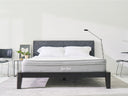
In Japan's hot and humid environment, the occurrence and proliferation of mold and mites are inevitable. That's why it's crucial to choose a mattress material that is breathable and mold/mite-resistant, suitable for this environment. Mattresses designed with an emphasis on breathability are said to have a lower chance of mold and mite growth and proliferation due to their material and structure, compared to bedding like futons. Additionally, for the top cover that directly touches your skin, we recommend Tencel material that is mold and mite-resistant. It's not only pleasant to the touch but also a smart material that controls humidity through its moisture-absorbing and releasing properties. Please keep this in mind when choosing a mattress material for a better environment, better sleep, and a better life.
Mattress mold and mite extermination
Mold extermination on mattresses with rubbing alcohol
Rubbing alcohol, available at any drugstore, is ideal for removing mold and mites, especially mold, from mattresses. Spray the mold and mites with rubbing alcohol, let it sit for about an hour, then wipe it off with a cloth soaked in lukewarm water, dabbing rather than rubbing. To effectively remove mold and mites, take advantage of their nocturnal nature by turning off the lights for about an hour beforehand to encourage them to come out. For stubborn odors from bedwetting, which is not mold or mites, citric acid water is very effective.
Extermination of mattress mites by drying
While using a specialized mite spray can help eliminate mites, "drying" is the most effective method. Mites are very vulnerable to "dryness" and "heat," so on a sunny day, hang your duvet outside, air out your mattress well, and dry out any sweat or other moisture. It's also recommended to lean your mattress against a wall to eliminate mites that have accumulated on the bottom surface. After drying, thoroughly vacuum up any mite feces or dead mites. Mite extermination is not just about killing them; it's crucial to also vacuum up their feces and dead bodies, which can affect your health. On cloudy days, use the mite extermination mode of a futon dryer to eliminate mites from your mattress. Don't forget to vacuum up the feces and dead bodies afterward.
When to replace your mattress
What is the condition of your current mattress? If the mold and mites are confined to a small area, you might be able to handle it with the extermination methods described. However, if it's widespread and you continue to use it, it could negatively impact your health. The lifespan of a mattress is said to be 10 years. If you've been using it for nearly 10 years, or if mold and mites are visibly growing significantly on your mattress, it might be time to replace it.
Preventing mold and mites for a healthy and happy everyday life
How was it? Did you re-learn just how close mold and mites are in our everyday mattresses? Knowing is the first step towards improvement. Let's start with what we can do and live a healthy and happy life!


